なぜワインにスパイス料理を合わせるのか
南インドの知恵と、日本の食材
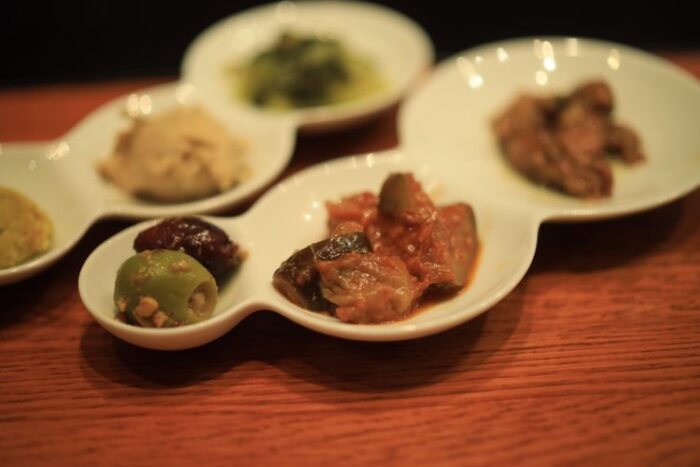
大阪・中之島にあるパセミヤでは、南インド・タミルナードゥの料理を土台にしたスパイス料理に、日本のナチュラルワインを合わせています。スパイスとワイン——一見、ぶつかり合いそうな取り合わせを、なぜわざわざ合わせるのか。そして、なぜ「この料理にはこのワイン」という一対一の正解ではなく、組み合わせそのものを大切にしているのか。その理由を、少しだけお話しさせてください。
ふたつとも、ひとつの味ではない
スパイス料理もワインも、ひとつの味で言い切れるものではありません。
スパイスは、ひとつだけで使うことはまれです。いくつかを組み合わせることで風味が立体的になり、口に含んでから飲み込むまでのあいだに、香りや味が波のように移り変わっていきます。最初に酸が立ち、次に焙煎したスパイスの温かみが鼻に抜け、最後に辛味の余韻が残る——そんなふうに、時間のなかで展開していきます。
ワインも同じです。グラスに鼻を寄せたときの第一印象、口に含んだ瞬間の果実味や酸、飲み込んだあとの余韻。一杯のワインを飲む体験も、時間とともに変化していく動的なものだと思っています。
合うのは、どちらも「単純な味」ではないからではないか。私たちはそう考えています。
パセミヤのスパイス料理のこと
土台にしているのは、南インド・タミルナードゥの料理です。今のかたちは、2019年から試作を重ねながら、少しずつ形にしてきたものです。
私たちがタミルナードゥの料理に繰り返し立ち返るのは、その風味の構造が見えやすいからでもあります。酸味、香り、苦味、食感、発酵といった要素が、それぞれ独立した輪郭を保ちながら共存している。そのため、ワインとの関係を考えるためのよい出発点になるのです。
出汁は使いません。にんにく、玉ねぎ、トマト、レッドチリ、油で味のベースをつくっていく——この点で、インド料理はイタリア料理にずいぶん近いと感じています。難しいのは、きちんとうま味が出るまでの加熱のタイミングとバランスで、ここがいちばん時間のかかるところです。
レッドチリにはカシミリチリを使います。日本の鷹の爪とは、香りも味の厚みもまるで違います。トマトは、生のフレッシュさが必要なとき以外はイタリアのパッサータを。日本のトマトは、酸味とうま味を引き出すのに時間がかかるように思うからです。
そして塩と、タマリンドやレモンの酸が、味の輪郭をつくります。じつは、この酸と塩のあたりが、ワインと出会う最初の接点になります。この骨格の上に、複数のスパイスと季節の素材を重ねていきます。一部には、日本の食材も織り交ぜています。
和らげるのではなく、対話する
ワインがスパイス料理を「和らげる」「中和する」という言い方を、ときどき耳にします。けれど私たちが面白いと感じているのは、そこではありません。
料理の酸とワインの酸が響き合う。スパイスの香りが、ワインのなかに眠っていた別の香りを呼び起こす。辛味で活性化した口のなかで、ワインの繊細なニュアンスが、かえって鮮明になる。
どちらかがどちらかを抑え込むのではなく、対等なまま声を交わし、互いの新しい一面を引き出し合う。そんな瞬間が、ときどき訪れます。
ふたつの楽器が同時に鳴るとき、それぞれの音は独立を保ったまま、どちらか一方だけでは生まれなかった響きをつくります。ペアリングも、それに近いのかもしれません。
一対一ではなく、組み合わせのなかで
ですから私たちは、「この一皿にはこの一杯」という一対一の正解を組むことを、あまりしていません。
同じ一杯でも、隣に置かれる皿によって、違う表情を見せるからです。ラッサムの隣で飲むときと、ココナッツの効いた一皿の隣で飲むときとでは、同じワインが別の味に感じられる。ワインは固定した「もの」ではなく、まわりとの関係のなかで、そのつど違う何かになっていく。私たちは、そんなふうに捉えています。
用意しているのは、一皿ごとの答えというより、複数の料理と一杯、あるいは数杯が出会う「場」のほうです。
これは、展覧会の配置に少し似ているかもしれません。一点の作品だけを見るのと、別の作品の隣に置かれたそれを見るのとでは、意味が変わってくる。どの作品を、どの順で並べるか。その配置によって、見えてくる関係が変わります。
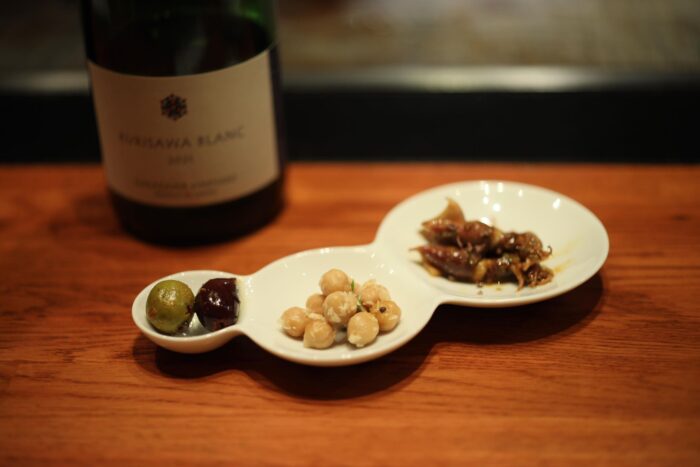
スパイスのセットを組むとき、私たちが考えているのも、それに近いことです。皿と皿のあいだ、皿とワインのあいだに、どんな関係が生まれるか。そして最後の配置は、お客さま自身に委ねられています。どの順で食べ、どこで一口飲むか。
交互に味わううちに、どこまでが料理の酸で、どこからがワインの酸なのか、その境界が少しずつ曖昧になってくる。境界が溶けるところで、どちらにも還元できない第三の味——別の文脈——が立ち上がります。
この試みを、私たちはペアリングというより、ささやかなキュレーションのようなものだと思っています。
日本のワインを選ぶこと
合わせるワインは、2024年からとくに日本のものへ重心を移しました。果実の重さで押し切るよりも、軽やかで、酸の輪郭が明瞭なものを選ぶことが多いです。日本各地のブドウから生まれるワインには、繊細さと透明感があり、スパイス料理の複雑さのなかへ静かに入り込んでいくように感じています。
たとえば甲州の柑橘のような爽やかさは、タマリンドの酸やコリアンダーの香りと、思いがけず響き合います。マスカット・ベーリーAのやわらかなタンニンは、スパイスのほろ苦さと、そっと手をつなぎます。
そして日本のナチュラルワインもまた、その土地の気候や土、つくり手の手が関わって生まれたものです。固定した「場所の味」というより、さまざまな関わりのなかで、毎年生まれ直していく何か。
だからこれは、いわゆる「フュージョン」とは少し違うように思っています。大阪という土地で、南インドの知恵と、日本のブドウから生まれた一杯を出会わせる。異なる土地の声が、対話を始める瞬間を用意すること。私たちがやろうとしているのは、おそらくそういうことです。
おわりに
スパイスの組み合わせは無限にあり、ワインもまた、毎年違う顔をして生まれてきます。ですから、この対話に「正解」も「完成」もありません。
その日のお皿と、その一杯が出会ったときに、何が起こるか。境界が溶けて、思いがけない味が立ち上がる、その瞬間に立ち会うこと。よろしければ、カウンターやテーブルで、ご一緒に確かめていただけたらと思います。
あわせてお読みください
私たちが、なぜ日本ワインを中心に扱うことにしたのかについては、こちらのページで詳しくご紹介しています。
パセミヤ — 大阪・中之島(1965年創業)
お好み焼き、南インドのスパイス料理、日本ワインを供する、予約制の小さなレストランです。
Instagram:@okonomi_pasania
note:note.com/pasania
Google Map:g.page/pasania
Why Spice with Wine?
South Indian Ideas, Japanese Ingredients
At Pasania, we serve spice cooking built on the food of Tamil Nadu in South India, and we pour Japanese natural wine alongside it. Spice and wine—a pairing that sounds, at first, as though it might simply clash. Rather than fixing “this wine for this dish,” however, we care about the combination itself. Here is why.
Neither is a single flavour
Spice cooking and wine are both hard to sum up in a single taste.
Spices are rarely used alone. Combined, they give a dish dimension, and from the first mouthful to the last, the aromas and flavours shift like waves: an acidity that rises first, then the warmth of roasted spice, and finally the lingering trace of chilli. The experience unfolds over time.
Wine is the same. The first impression as you bring the glass to your nose, the fruit and acidity the moment it reaches your tongue, and the finish that stays after you swallow—drinking a glass of wine, too, is something that moves and changes in time.
Perhaps they suit each other precisely because neither is a simple flavour. That, at least, is how we have come to see it.
About our spice cooking
The food rests on the cooking of Tamil Nadu in South India. We have shaped it gradually since 2019, through a great deal of trial and error.
We return to Tamil cooking because its structure of flavour is unusually clear. Acidity, aroma, bitterness, texture, and fermentation remain legible as distinct elements while coexisting within a dish. This makes it a particularly good starting point for thinking about its relationship with wine.
We use no dashi. The base is built from garlic, onion, tomato, red chilli, and oil—and in this, we feel, Indian cooking is surprisingly close to Italian cooking. The difficult part is the timing and balance of the cooking: the patient work of drawing out real savouriness.
For the red chilli, we use Kashmiri chilli, whose aroma and depth are quite different from Japanese taka-no-tsume. For tomato, unless a dish needs the brightness of fresh fruit, we reach for Italian passata, since Japanese tomatoes seem to us slower to give up their acidity and umami.
Salt, together with the sourness of tamarind or lemon, draws the outline of a dish—and it is around this acidity and salt that the wine first finds its way in. On that frame, we layer several spices and the ingredients of the season; here and there, a few Japanese ingredients find their place too.
Not to soften, but to converse
People sometimes say that wine “softens” or “neutralises” spicy food. But that is not what interests us.
The acidity of a dish and the acidity of a wine answer one another. A spice draws out an aroma that was sleeping inside the wine. With the mouth awakened by chilli, a wine’s finer nuances may become even clearer.
Rather than one overpowering the other, the two keep their own voices and call something new out of each other. Now and then, that moment arrives.
When two instruments sound together, each note stays itself and yet creates a resonance neither could have made alone. Pairing, perhaps, is close to that.
Not one-to-one, but within the combination
So we rarely set out a single “correct” wine for a single dish.
The same glass shows a different face depending on what sits beside it. A wine tastes one way next to a rasam, and another beside a dish rich with coconut. Wine is not a fixed object; in relation to what surrounds it, it becomes, each time, something slightly different. That is how we have come to think of it.
What we prepare, then, is less an answer for each plate than a setting in which several dishes and a glass—or a few glasses—can meet.
It is a little like the hanging of an exhibition. Seeing a single work alone, and seeing it placed beside another, are not the same; the meaning shifts. Which works, in which order—the arrangement changes the relationships that come into view.
When we put a spice set together, we are thinking of something close to that: what might arise between one plate and the next, and between a plate and a wine. The final arrangement is left to you—in what order to eat, and where to take a sip.
As you move between them, the line between where the dish’s acidity ends and the wine’s begins slowly blurs. Where that boundary dissolves, a third taste rises: a different context that cannot be reduced to either one alone.
This attempt we think of less as pairing than as a small act of curation.
Choosing Japanese natural wine
Since 2024, we have shifted the cellar particularly toward Japanese natural wine. More often than not, we choose wines that are light and clearly acidic rather than ones that win by sheer weight of fruit. Wines born from grapes grown across Japan have a delicacy and transparency that seem to slip quietly into the complexity of spice.
The citrus brightness of a Koshu, for instance, finds an unexpected echo in the acidity of tamarind and the aroma of coriander. The soft tannins of Muscat Bailey A quietly take the hand of a spice’s gentle bitterness.
Japanese natural wine, too, is born of a place—its climate, its soil, and the hands of the people who make it. It is less a fixed “taste of somewhere” than something remade each year within a web of relationships.
So this is a little different from what is usually called “fusion.” Here in Osaka, we bring the wisdom of South India together with a glass born of Japanese grapes, and try to prepare the moment when the voices of two different places begin to converse. That, more or less, is what we are attempting.
In closing
The combinations of spice are endless, and wine, too, is born each year with a different face. So this conversation has no single right answer, and no point of completion.
What happens when a particular plate meets a particular glass—the moment the boundary dissolves and an unexpected taste rises. We would be glad to discover it together with you, at the counter or at a table.
Read more
Interested in why our cellar now focuses on Japanese wine?
Pasania — Nakanoshima, Osaka (est. 1965)
A small, reservation-only restaurant serving okonomiyaki, South Indian-inspired spice dishes, and Japanese wine.
Instagram: @okonomi_pasania
Essays: note.com/pasania
Google Map: g.page/pasania